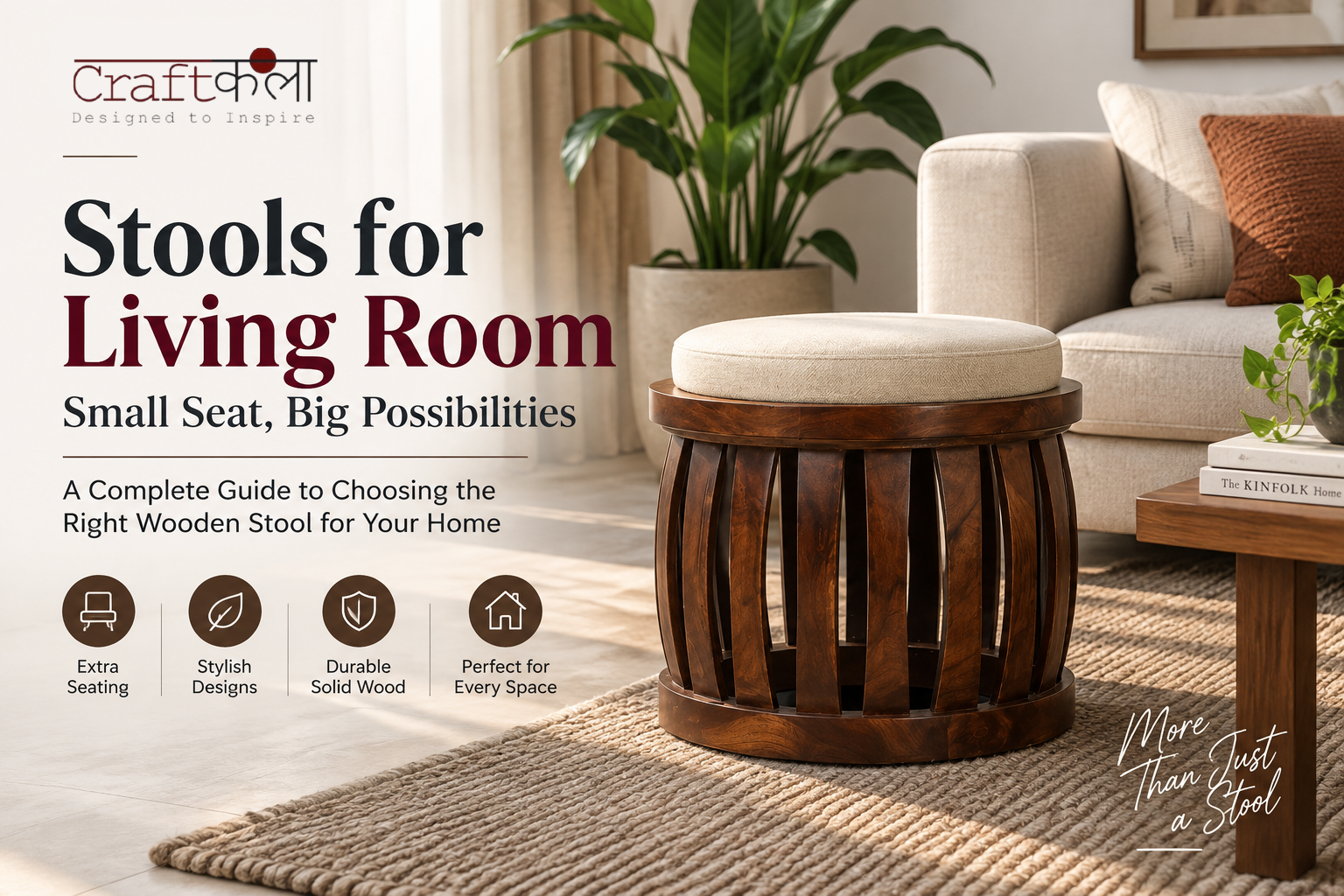
A stool may look like a small piece of furniture, but the right one can be surprisingly useful in a living room. You can use it as extra seating when guests arrive, a footrest beside your sofa, a small accent piece, or even a temporary surface for books and décor.
Today, stools for sitting spaces come in many shapes, materials and styles. From a simple small wooden stool to a comfortable stool with cushion, the best choice depends on how you plan to use it, how much space you have and the overall style of your room.
Wooden stools are especially popular because they bring warmth and natural character while taking up less space than a full-sized chair. Current furniture collections in India also include Sheesham, mango, teak and other wooden stools in both minimalist and upholstered designs.
Why Stools for Living Room Spaces Are Useful
A stool is one of those furniture pieces that can serve more than one purpose.
Keep a couple near the sofa and they become stools for living room when you have extra guests. Place one beside an armchair and it can work as a footrest. A decorative stool can also fill an empty corner without making the room feel crowded.
This flexibility is particularly useful in apartments and compact Indian homes where every piece of furniture needs to earn its space.
A well-designed stool can be used as:
- Extra seating for guests
- A footrest beside a sofa or armchair
- A small accent table
- A plant stand
- A decorative piece
- Temporary seating in a reading corner
Some contemporary designs are specifically made to work as both seating and footrests, making them practical for everyday living rooms.
How to Choose the Right Small Wooden Stool
Before choosing a stool, think about where it will actually be used.
If you have a compact living room, a small wooden stool can provide additional seating without taking up the floor space required by another chair. A lightweight design is also easier to move around when needed.
For regular seating, however, don’t choose purely based on appearance. Check the height, seat size, stability and weight capacity.
The stool should feel stable when someone sits on it. Look for properly joined legs, a solid frame and a well-finished seat. If the stool is made from solid wood, examine the grain and construction rather than judging quality only by the finish.
A compact stool can also work particularly well in homes where furniture needs to be moved frequently. You can pull it beside the sofa when guests arrive and move it back to another corner afterward.
Choosing a Wood Stool Design
The design of your stool should complement the furniture already in the room.
A simple round stool can work beautifully in a modern or minimalist space. A square stool with straight legs can look more structured and pairs well with contemporary sofas. Carved or traditionally detailed designs can add character to classic interiors.
When choosing a wood stool design, pay attention to the wood finish as well. Natural wood tones generally blend easily with neutral interiors, while darker finishes can create a stronger contrast against lighter sofas and walls.
The construction also matters. Sheesham, teak, mango and acacia are commonly used in Indian wooden furniture, but each has a different appearance and feel. More importantly, properly seasoned or kiln-dried wood is worth looking for because moisture changes can affect furniture over time.
Stool With Cushion or Without?
This is one of the biggest decisions when buying a stool.
A plain wooden seat gives you a clean, minimal appearance and is easy to maintain. It can work particularly well as a decorative stool, plant stand or occasional seat.
A stool with cushion, on the other hand, is more comfortable for longer sitting. It is particularly useful when the stool will regularly be used as additional seating rather than simply as décor.
Cushion quality matters here. Look at the foam, fabric, stitching and whether the cushion can be removed for cleaning. Current Indian furniture options include wooden stools with removable upholstered cushions, including designs using solid Sheesham frames.
For a family living room, a neutral cushion can be a practical choice because it works with different furniture styles and doesn’t dominate the room.
Wooden Stool for Living Room: What Size Works Best?
There is no single perfect stool size because living rooms vary considerably.
A stool placed beside a sofa should not feel oversized compared with the seating around it. Likewise, a very low stool may be comfortable as a footrest but awkward for regular seating.
Think about its purpose first.
If you mainly want a wooden stool for living room décor, a compact low-profile design may be enough. If you want it for regular sitting, choose a height and seat area that allow people to sit comfortably without feeling cramped.
Also leave enough space around the stool for people to walk comfortably. One common mistake is buying a beautiful stool that technically fits the room but makes movement around the sofa difficult.
Wooden Stool for Sitting vs Wooden Stool Table
A stool doesn’t always have to be used as a seat.
A flat-topped wooden stool table can act as a convenient surface beside a sofa or chair. You can place a cup of tea, a book, a small lamp or decorative object on it.
However, don’t assume every stool is designed to function as a table. Check the manufacturer’s intended use and the stability of the top before placing heavier objects on it.
This is where a multipurpose stool can be particularly useful. During everyday use, it can work as an accent table. When guests arrive, you can move it into the seating arrangement.
Stool Wooden Chair: Are They the Same?
A stool wooden chair is generally more compact than a conventional chair and usually doesn’t have a backrest or armrests.
That difference makes stools useful when you need flexible seating but don’t want another bulky chair.
For example, two stools can sit underneath or beside a console when they’re not being used. During gatherings, they can be pulled into the seating area.
If back support is important because someone will sit for extended periods, however, a proper chair or armchair may be more appropriate.
Wooden Chairs and Stools: How to Mix Them
You don’t need every seating piece in your living room to match perfectly.
Combining wooden chairs and stools can actually make a room feel more layered and natural. The easiest way to create a coordinated look is to repeat one element—such as the wood tone, cushion colour or design detail.
For example, a solid wood armchair with a natural-finish stool can look cohesive even if their shapes are different.
The goal is coordination rather than creating an identical furniture set.
How to Style a Stool in the Living Room
A stool can become a useful styling element when positioned thoughtfully.
Place a cushioned stool next to an armchair to create a comfortable reading corner. Use a low wooden stool as a plant stand near a window. A pair of matching stools can sit opposite a sofa for flexible seating.
You can also place a small stool near the entrance of an open-plan living room, giving you somewhere to sit while putting on shoes.
For a more premium look, solid wood furniture with visible natural grain works particularly well with neutral upholstery, woven textures and indoor plants.
Common Mistakes to Avoid
Before buying a stool, avoid these common mistakes:
Choosing only by appearance: A beautiful stool is not useful if it is uncomfortable or unstable.
Ignoring the height: Check the height in relation to your sofa or chair.
Buying the wrong size: Measure the available floor area before ordering.
Overlooking construction: Check the frame, joints, legs and overall finish.
Choosing difficult upholstery: If the stool will be used regularly, select a fabric that is practical for your household.
Using a stool for the wrong purpose: A decorative stool may not be designed to support frequent seating.
Are Wooden Stools Worth Buying?
For many homes, yes—especially when you want flexible furniture without adding visual bulk.
A well-made wooden stool can serve several purposes throughout the home. It can be a sitting stool, footrest, side table, plant stand or occasional seat depending on its design.
The key is to choose according to actual use rather than buying simply because the design looks attractive.
For CraftKala, solid wood construction and handcrafted detailing make stools particularly suited to buyers who want a piece that feels like furniture rather than a temporary accessory. The right finish, proportions and craftsmanship can help a simple stool remain useful as your room and furniture arrangement change.
FAQs About Stools for Living Room
Can I use a wooden stool as a living room seat?
Yes. A properly constructed stool can work as occasional or regular seating, provided its height, seat size and weight capacity are suitable.
Is a stool with cushion more comfortable?
Generally, a stool with cushion provides more cushioning than a bare wooden seat and is better suited to longer sitting.
What wood is good for a wooden stool?
Sheesham, teak, mango and acacia are commonly used for wooden furniture. The construction and proper seasoning of the wood are also important factors in durability.
Can a wooden stool be used as a table?
Some stools can double as small tables, particularly those with a stable, flat top. Always check the intended use and weight capacity first.
Are stools suitable for small living rooms?
Yes. Their compact footprint makes them useful when you need additional seating without adding a full-sized chair.
Should I choose a round or square stool?
Choose based on your room layout and existing furniture. Round stools can soften a room with lots of straight lines, while square designs can create a more structured look.
Conclusion
The best stools for living room spaces are not necessarily the largest or most decorative ones. They are the pieces that fit naturally into your home and give you more flexibility.
Consider how you will use the stool, measure your available space, choose a suitable wood and decide whether you need a cushioned seat. A thoughtfully designed wooden stool for sitting can provide extra comfort today while continuing to work as a footrest, accent piece or side table tomorrow.