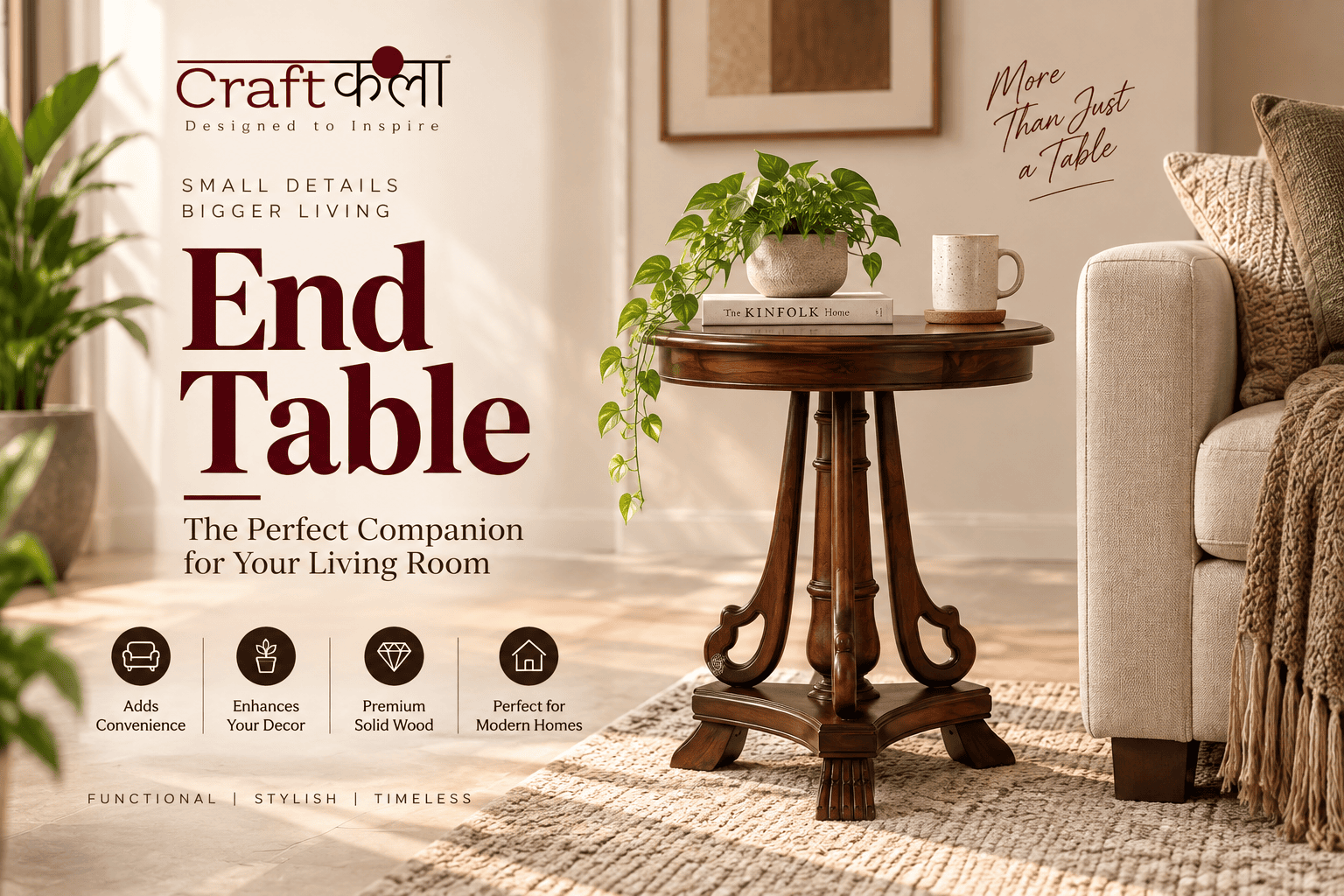
An end table may be one of the smallest pieces of furniture in your living room, but it can make everyday life much easier. It gives you a convenient place for your coffee, books, remote, phone, table lamp or a small decorative piece without taking up the space of a full-sized table.
The challenge is choosing one that actually fits your sofa, room and lifestyle. A table that looks beautiful online may feel too tall, too small or difficult to use once it reaches your living room.
This guide explains what to look for in an end table, from size and material to storage and styling, so you can choose a piece that feels natural in your space.
What Is an End Table?
An end table is a compact table generally placed beside a sofa, armchair or other seating. It is sometimes called a side table or accent table.
The main difference between an end table and a coffee table is its position. A coffee table sits in front of the sofa and serves the entire seating arrangement, while an end table stays within easy reach of one particular seat.
That makes an end table more personal and practical. Your side of the sofa can have a lamp and your book, while another end table can hold drinks or décor.
Modern furniture collections in India offer end tables in solid wood, metal, marble, glass and mixed-material designs. Solid wood remains particularly popular for homeowners looking for warmth and durability.
Why Do You Need an End Table in the Living Room?
A well-placed table solves several small problems at once.
Imagine sitting on your sofa with a cup of tea. You don’t want to place it on the floor, stretch across the coffee table or keep getting up. An end table for living room seating keeps frequently used items right beside you.
It can be used for:
- Coffee, tea and water
- Books and magazines
- Remote controls
- Phones and chargers
- Table lamps
- Plants and décor
- Small storage baskets
This is also why the size of the table shouldn’t be your only consideration. Think about what you actually want to keep on it.
How to Choose the Right End Table Size
Size is where many buyers make mistakes.
The easiest starting point is your sofa arm height. Your end table should generally be around the same height as the sofa arm or slightly lower. Current furniture guides commonly recommend keeping the tabletop within roughly 1–2 inches of the sofa arm for comfortable access.
For example, if your sofa arm is approximately 24 inches from the floor, look for a table around that height rather than choosing one purely because its dimensions look attractive.
Also measure the available floor space. A large table beside a compact sofa can make the room feel crowded, while an extremely small table may not provide enough usable surface.
Leave enough room for people to walk around the sofa comfortably.
End Tables in Living Room: Choosing the Right Shape
The shape should work with both your furniture and the available space.
Round End Tables
Round tables are useful when your living room has tight walking areas or lots of straight-edged furniture. Their curved shape can soften the overall look.
They also work nicely beside rounded sofas and armchairs.
Square End Tables
Square designs offer a more structured appearance. They work well with contemporary sofas and larger seating arrangements where there is enough space beside the armrest.
Rectangular End Tables
A rectangular end table can be useful when you need a little more surface area but have limited width. It can accommodate a lamp, book and drink without requiring a large footprint.
Don’t choose the shape just because it is trendy. Consider how people move around the table and what you plan to place on it.
Why Choose Wood End Tables?
Wood end tables are a practical choice if you want your living room to feel warm and natural.
Unlike glass or metal, wood introduces visible grain and texture into the room. It can also pair easily with different upholstery colours, flooring and other wooden furniture.
Solid wood is particularly useful for an end table because the piece is likely to experience regular everyday use. Cups, books, lamps and décor can all add wear over time, so construction quality matters.
Indian furniture collections commonly feature woods such as Sheesham, mango and acacia for end and side tables.
When buying solid wood furniture, don’t look only at the word “wooden” in the product description. Check whether the table is actually made from solid wood or uses veneer, engineered wood or a combination of materials.
Is an End Table Teak Wood a Good Choice?
An end table teak wood design can be a strong option for people who like a rich natural finish and durable hardwood furniture.
Teak has a naturally distinctive grain and is traditionally valued for its durability and moisture resistance. Solid teak end tables are available in both traditional handcrafted designs and more contemporary shapes.
The important thing is to match the finish with the rest of your furniture. A dark teak or walnut-style finish can create a bold contrast with a light sofa, while a lighter finish can give a smaller room a more relaxed appearance.
When Should You Choose an End Table With Storage?
If your living room regularly collects small items, an end table with storage can be much more useful than a completely open design.
A drawer can hide things such as:
- TV remotes
- Charging cables
- Small electronics
- Reading glasses
- Notebooks
- Coasters
An open shelf, meanwhile, is useful when you want easy access to books or magazines.
Think about your habits before choosing the design. If you prefer a clean tabletop, a drawer gives you somewhere to put everyday clutter. If you like displaying books and décor, an open shelf may be more suitable.
Some current end-table designs combine drawers, shelves and charging-friendly layouts to make the furniture more useful for modern living.
Side End Table vs End Table
You may notice furniture websites using terms such as side end table, side table and end table interchangeably.
For most living room purposes, there isn’t a major functional difference. All are generally small tables positioned next to seating.
The important factors are height, width, depth, stability and intended use—not the name given to the table.
So instead of searching only for a particular term, focus on finding a design that fits your sofa and room.
How to Style an End Table
An end table doesn’t need to be covered with accessories.
A simple arrangement often looks better. Try placing a table lamp toward one side, a small stack of books underneath or beside it, and one decorative object such as a plant or ceramic piece.
If your table already has an attractive wood grain, don’t hide it under too many accessories. The natural texture can be the main decorative feature.
For a more coordinated room, repeat the table’s wood tone elsewhere—for example, through the legs of your sofa, TV unit, cabinet or coffee table.
Common End Table Buying Mistakes
Before purchasing, watch out for these common mistakes.
Ignoring sofa height: A table that is too high or low can become uncomfortable to use.
Choosing based only on appearance: A beautiful table is not useful if it has very little usable surface.
Forgetting walking space: Measure the area beside your sofa before ordering.
Buying unnecessary storage: If you don’t need drawers, an open design may give your room a lighter appearance.
Not checking construction: Look at the legs, joints, tabletop thickness and finish.
Mixing too many wood tones: Different woods can work together, but too many unrelated finishes can make the room feel visually busy.
How to Maintain a Wooden End Table
A solid wood end table is relatively easy to maintain.
Use coasters under drinks and wipe spills quickly. Avoid leaving wet glasses or hot cups directly on the surface. Dust regularly with a soft cloth and follow the manufacturer’s recommendations for polishing or refinishing.
Keep the table away from prolonged direct sunlight where possible, as continuous exposure can gradually change the appearance of natural wood.
With basic care, a well-made wooden table can remain useful for many years.
FAQs About End Tables
What height should an end table be?
Ideally, the tabletop should be around the same height as your sofa arm or slightly lower. Measure your sofa rather than relying only on standard dimensions.
Can I use an end table as a side table?
Yes. In most living room settings, the terms side table and end table describe very similar furniture pieces.
Is solid wood better for an end table?
Solid wood is a durable and visually warm option, especially for furniture that receives regular everyday use. Construction quality and proper finishing also matter.
Are teak wood end tables durable?
Teak is known for its strength and natural resistance to moisture, making it a popular choice for durable wooden furniture.
Should an end table have storage?
Choose storage if you need to hide remotes, chargers, books or other small items. If you prefer a minimalist look, an open table may be enough.
How far should an end table be from the sofa?
Keep it close enough for comfortable reach while leaving a small gap so the table doesn’t rub against the sofa. The exact distance depends on the sofa and table design.
conclusion
The right end table should do more than fill an empty space beside your sofa. It should make the seating area more comfortable, give everyday essentials a convenient place and complement the furniture already in your home.
Start by measuring your sofa arm height and available floor space. Then consider the shape, wood, storage and finish based on how you actually use your living room.
For homeowners who value natural materials and lasting furniture, a well-crafted solid wood end table can be a small addition with a surprisingly big impact.